
When homeowners start researching roof replacement options, one of the first questions they ask is whether metal roofing is actually cheaper than shingles. The answer is not always straightforward because while asphalt shingles usually cost less upfront, long-term costs can look very different once maintenance, repairs, lifespan, and energy efficiency are considered. For many homeowners researching Oregon roofing, understanding the full financial picture matters more than simply choosing the lowest installation quote.
Oregon homeowners deal with heavy rain, moisture exposure, moss growth, and changing weather conditions year-round. Because of this, Oregon roofing decisions often involve more than appearance alone. Durability, weather resistance, maintenance demands, and long-term value all play major roles when comparing roofing materials.
What Are The Disadvantages Of A Metal Roof?
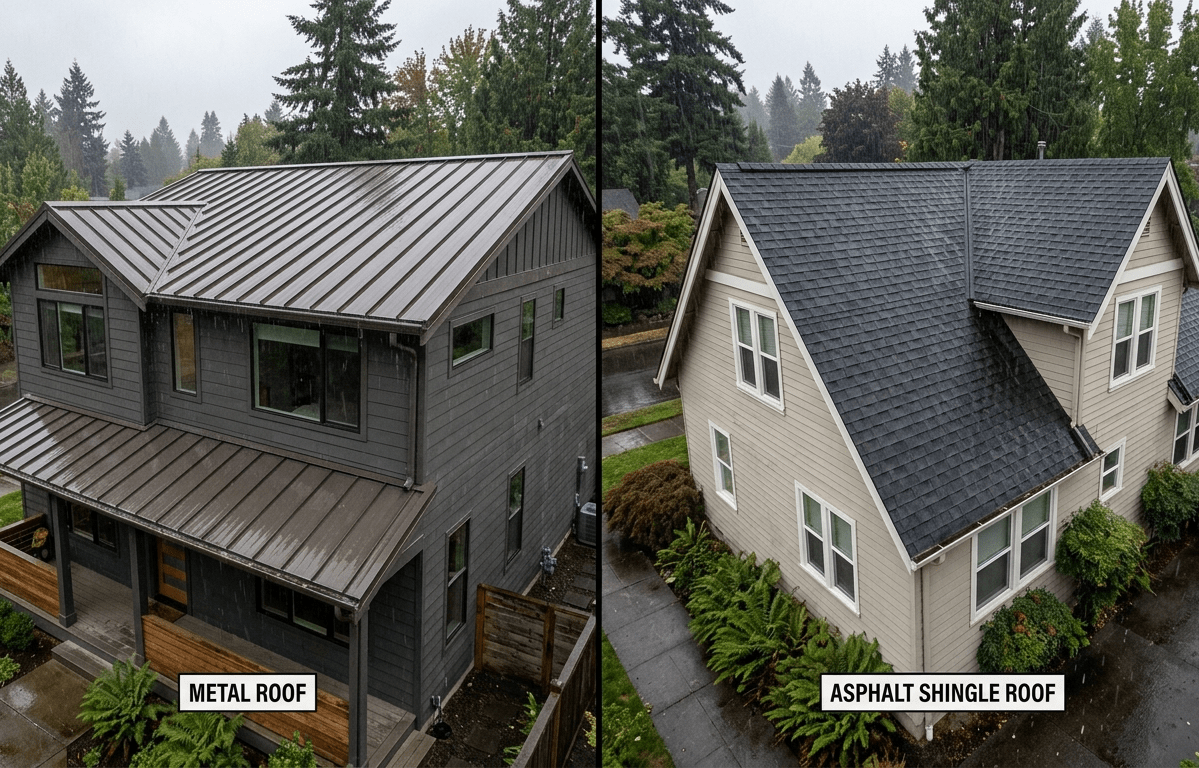
Metal roofing offers exceptional durability and lifespan benefits, but homeowners should still understand the disadvantages before making a final decision. The biggest concern for many Oregon roofing customers is the higher upfront investment compared to asphalt shingles. Metal roofing systems generally require more expensive materials and specialized labor, which can significantly increase installation costs. While many homeowners appreciate the long-term value, the initial expense may not fit every budget or ownership plan.
Another factor homeowners should consider is installation complexity. Metal roofing systems require precise flashing details, correct fastener placement, and proper waterproofing techniques. Poor workmanship can eventually lead to leaks, panel movement, corrosion, and premature wear. That is why working with experienced Oregon roofing contractors becomes especially important when installing a metal roof. Homeowners often underestimate how much installation quality affects long-term performance.
Some homeowners also worry about noise during heavy rain or hailstorms. Fortunately, modern metal roofing systems, when properly insulated and underlayed, are often much quieter than expected. Still, appearance preferences can influence decisions. While modern metal roofing comes in many attractive colors and styles, some homeowners simply prefer the traditional look of asphalt shingles. Every Oregon roofing project involves balancing budget, durability, style, and long-term expectations.
Which Is Cheapest, Metal Roof Or Shingles?
In most situations, asphalt shingles remain the cheaper roofing option upfront. Traditional asphalt shingle systems remain among the most affordable choices for Oregon roofing because material and labor costs are generally lower. Installation timelines are often faster, and many contractors can install shingles efficiently. For homeowners focused primarily on immediate affordability, shingles often appear to be the clear winner.
However, long-term roofing costs tell a more complete story. Metal roofing systems often last significantly longer than asphalt shingles while requiring less maintenance over time. Many Oregon roofing homeowners eventually realize that replacing shingles multiple times over several decades can cost more than installing one durable metal roof initially. That long-term perspective becomes especially important for homeowners planning to stay in their homes for many years.
Energy efficiency also affects the overall value comparison. According to the U.S. Department of Energy, metal roofing can help reflect solar heat and reduce cooling demands during warmer months. Homeowners researching Oregon roofing solutions often appreciate the potential energy savings alongside the durability benefits. While shingles may cost less upfront, the cheapest roof today does not always remain the cheapest roof over time.
Are Shingles Or Metal Roofing Better?
There is no universal answer to whether shingles or metal roofing are better because every homeowner values different things. Some Oregon roofing customers prioritize affordability and appearance, while others prioritize durability, reduced maintenance, and lifespan. Asphalt shingles may work well for homeowners seeking a traditional look and lower initial costs. Metal roofing may appeal more to homeowners focused on long-term performance and weather resistance.
Oregon weather conditions heavily influence roofing performance. Frequent rainfall, moisture retention, moss growth, and changing temperatures place constant stress on roofing systems. Many Oregon homeowners choose metal roofing specifically for its stronger resistance to moisture-related damage. Others still prefer architectural shingles because they better complement their homes’ style. The right roofing choice depends on the property, budget, and long-term ownership goals.
Roofing materials should always be evaluated based on multiple factors instead of popularity alone. Lifespan, maintenance requirements, energy efficiency, weather durability, curb appeal, and structural needs all deserve careful consideration. Homeowners who take time to compare all these factors usually make more confident Oregon roofing decisions that better match their long-term expectations.
What Type Of Roof Is The Cheapest?
Asphalt shingles remain among the cheapest residential roofing materials for most homeowners. Three-tab shingles remain popular because they offer lower material costs, easier installation, and more affordable repair options. Many Oregon homeowners select architectural shingles because they strike a balance among cost, durability, and appearance without dramatically increasing the budget.
Still, homeowners should understand that lower upfront costs do not always mean lower lifetime costs. Some inexpensive roofing systems require more repairs, shorter replacement cycles, and higher maintenance demands over time. A homeowner may initially save money during installation, only to face higher repair costs later. That is why experienced Oregon roofing contractors encourage homeowners to evaluate total ownership costs rather than focusing solely on the installation quote.
For homeowners planning shorter-term ownership, lower-cost roofing systems may absolutely make sense. However, homeowners planning to stay in their homes for decades often benefit from comparing lifespan and maintenance expectations alongside initial pricing. Oregon roofing decisions become much easier when homeowners understand both short-term affordability and long-term value.
What Is The Average Lifespan Of A Metal Roof?
The average residential metal roof typically lasts between 40 and 70 years, depending on the material, installation quality, environmental conditions, and maintenance habits. One of the biggest advantages of metal roofing is longevity. Compared to traditional asphalt shingles, which may last between 15 and 30 years, metal roofing often continues performing effectively for decades longer. Many Oregon homeowners choose metal roofing systems specifically to avoid multiple future replacements.
Several factors influence how long a metal roof lasts. Material quality, protective coatings, ventilation, drainage design, and weather exposure all play important roles. Oregon roofing systems regularly face heavy rain, moisture exposure, and seasonal temperature fluctuations, so proper installation is critical to maximizing lifespan. Even premium roofing materials can underperform if installation details are poorly handled.
Metal roofing also performs extremely well against fire exposure, UV damage, wind, moisture, and snow accumulation. However, not all metal roofs perform equally. Standing seam systems with concealed fasteners often last longer than exposed-fastener systems. Homeowners researching Oregon roofing options should compare not only roofing materials but also installation methods and contractor experience before making a final decision.
What Is Better Than A Metal Roof?
Whether something is better than a metal roof depends entirely on the homeowner’s priorities. Different roofing materials offer different strengths, tradeoffs, and visual styles. Some Oregon homeowners prefer slate roofing for its luxurious appearance and exceptional lifespan. Others prefer tile roofing for architectural character or cedar shake roofing for natural aesthetics. Every roofing system comes with advantages and disadvantages involving cost, maintenance, weight, durability, and curb appeal.
Architectural shingles remain popular because they effectively balance affordability and visual appeal. Slate roofs may outlast metal roofing in certain conditions, but they also cost substantially more and often require stronger structural support. Tile roofing performs well in some climates but may not suit every Oregon roofing structure due to weight considerations and moisture exposure concerns. The best roofing material is the one that aligns with the homeowner’s goals, budget, and property needs.
Metal roofing continues to stand out primarily for durability, weather resistance, longevity, and energy efficiency. Still, homeowners should avoid assuming one roofing material is automatically superior in every situation. Oregon roofing decisions should always consider local weather conditions, maintenance expectations, appearance preferences, and long-term ownership plans before choosing a roofing system. Curious to know more? Take a look at How to Choose a Reliable General Contractor in Oregon.
Why Oregon Homeowners Compare Roofing Materials So Carefully
Oregon weather creates unique challenges for residential roofing systems. Frequent rainfall, moisture retention, moss growth, and changing seasonal conditions constantly affect roof performance throughout the year. Because of this, homeowners in Oregon often spend considerable time comparing materials before making final decisions. The roof protects not only the home itself but also long-term property value and structural integrity.
Many homeowners compare metal roofing and asphalt shingles because they want roofing systems that resist moisture effectively while minimizing maintenance demands. Moss growth and water exposure can gradually damage certain roofing materials if not properly maintained. Oregon roofing customers often prioritize durability and long-term protection because recurring repairs can become expensive. A reliable roofing system helps homeowners feel more secure during heavy storms and wet seasons.
Long-term investment value also influences roofing decisions. Many homeowners understand that replacing a roof represents a major financial commitment, so they want confidence that the material they choose will perform well for years. Oregon roofing systems must balance affordability, appearance, maintenance, and durability to effectively meet the demands of local weather conditions.
Final Thoughts
Metal roofing is usually more expensive upfront than asphalt shingles, but the long-term value comparison involves much more than installation cost alone. Lifespan, maintenance requirements, energy efficiency, weather resistance, and replacement frequency all affect the total financial picture. Many homeowners researching Oregon roofing options eventually realize that choosing the right roofing material depends on their long-term priorities rather than simply the lowest initial quote.
As we help homeowners navigate Oregon roofing decisions, we focus on honest guidance and realistic expectations instead of one-size-fits-all recommendations. Every property, budget, and homeowner goal is different, which is why careful comparisons matter so much. Whether someone values lower upfront pricing or long-term durability, understanding the tradeoffs helps create more confident roofing decisions.
If you are comparing roofing materials or planning a roof replacement project, we encourage you to explore your options carefully. At Danforth Construction, we help homeowners understand the real differences between roofing systems so they can make informed decisions that fit their homes and long-term goals. Contact us today to learn more about your Oregon roofing options and schedule a consultation with our team.