
Metal roofing has become increasingly popular among homeowners because it offers strong durability, weather resistance, and long-term value. Many homeowners researching Oregon roofing solutions are drawn to metal roofs because they handle rain, moisture exposure, and seasonal weather changes more effectively than many traditional roofing systems. A properly installed metal roof can also reduce maintenance demands while improving long-term roof performance.
However, installing metal roofing involves far more than simply attaching metal panels to a roof. Oregon roofing projects require careful planning for ventilation, moisture control, drainage, flashing, underlayment, and structural support. Understanding the installation process helps homeowners avoid costly mistakes and make more confident roofing decisions before starting a major project.
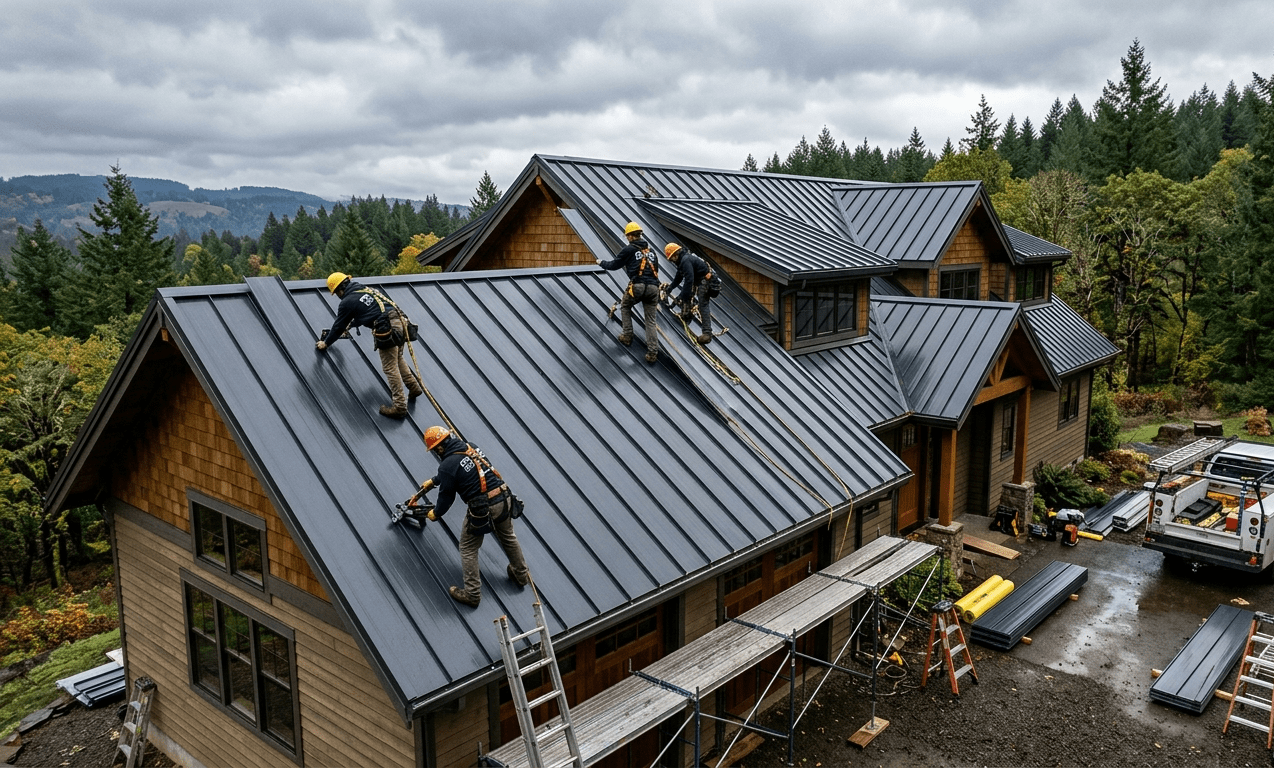
How To Install A Metal Roof Step By Step?
Installing a metal roof requires several carefully planned steps that work together to create a durable and weather-resistant roofing system. Proper installation begins with a full roof inspection and structural evaluation. Contractors must inspect the roof deck, identify moisture damage, evaluate ventilation systems, and determine whether repairs are needed before installation begins. Many Oregon roofing projects uncover hidden moisture damage beneath older roofing materials due to the region’s constant rainfall and humidity exposure.
After inspection, damaged decking must be repaired or replaced before underlayment installation begins. Underlayment systems help create a secondary moisture barrier beneath the metal roofing panels. Some Oregon roofing systems also require battens or furring strips to improve airflow and moisture management beneath the roof. Proper drip edges, flashing systems, valleys, and drainage details are then installed before the metal panels are aligned and fastened carefully into place.
Panel alignment is one of the most important parts of installation. Metal roofing systems rely heavily on accurate measurements and straight panel placement, as even small alignment errors can affect drainage performance and long-term durability. One Oregon roofing homeowner initially considered a do-it-yourself installation after watching online tutorials but later realized how complex flashing details and ventilation planning actually were. Professional installation often provides better long-term protection against leaks and moisture-related problems.
According to the U.S. Department of Energy, properly installed metal roofing systems can improve energy efficiency and help reduce cooling demands. Oregon homeowners often compare energy savings, lifespan, and maintenance requirements when evaluating the long-term value of a roof.
Do You Put Anything Under Metal Roofing?
Yes, nearly every metal roofing system requires some form of underlayment or protective moisture barrier beneath the metal panels. Underlayment plays a critical role in protecting the roof deck from condensation, wind-driven rain, and moisture intrusion. In Oregon roofing projects, underlayment is especially important because prolonged rainfall and humidity place constant stress on roofing systems year-round.
Common materials installed beneath metal roofing include synthetic underlayment, waterproof membranes, ice and water shields, felt underlayment, and ventilation systems. Some Oregon roofing systems also include battens or furring strips to improve airflow beneath the metal panels. These additional layers help reduce trapped moisture while improving long-term durability and drainage performance.
Many homeowners mistakenly assume that metal roofing alone creates a completely waterproof system. In reality, roofing systems function as multiple protective layers designed to manage water, airflow, and temperature changes. One Oregon roofing homeowner originally believed metal panels could simply be installed directly over bare decking, but skipping underlayment significantly increases the risk of condensation buildup and structural damage beneath the roof.
The correct underlayment system depends on roof pitch, ventilation design, climate conditions, and roofing material type. Oregon roofing contractors often recommend higher-quality moisture barriers because the local climate creates ongoing exposure to rain and moisture. Proper moisture management beneath the roof is just as important as the metal panels visible from the outside.
When Installing A Metal Roof, Where Do You Put The Screws?
Screw placement depends largely on the type of metal roofing system being installed. Oregon roofing contractors generally work with two primary categories of metal roofing systems: exposed-fastener systems and concealed-fastener systems. Each system uses different fastening methods designed for durability, moisture protection, and long-term performance.
Exposed fastener systems place screws visibly through designated portions of the metal panels. Standing seam systems often use concealed fasteners hidden beneath raised seams for a cleaner appearance and improved weather resistance. Improper screw placement is one of the most common causes of roofing failure because incorrectly installed fasteners can lead to water intrusion, loose panels, wind damage, and premature corrosion.
A homeowner in Oregon previously hired an inexperienced installer who over-tightened fasteners during installation. Over time, the compressed washers deteriorated, allowing moisture to penetrate around multiple screw locations. Proper fastener installation requires precise spacing, straight alignment, corrosion-resistant materials, and compatibility with the roofing panels themselves.
Fastener placement affects far more than appearance. Metal roofing systems depend on correct fastening patterns to handle expansion, contraction, wind exposure, and drainage safely. Oregon roofing systems exposed to constant moisture and changing temperatures especially benefit from professional fastening techniques designed for long-term weather resistance. Learn more about this in our article Why Coordinating Roofing, Gutters, and Garage Doors with a General Contractor Improves Home Protection.
Should I Put Plywood Down Before The Metal Roof?
In most residential roofing projects, yes, solid roof decking such as plywood is recommended or required beneath metal roofing systems. Plywood decking provides structural stability, smoother installation surfaces, better fastener support, and improved long-term roof performance. Oregon roofing contractors often recommend updated decking because older roofing systems sometimes contain weakened or uneven roof structures hidden beneath existing materials.
Some agricultural structures use open framing or purlin systems rather than full roof decking, but residential homes usually benefit significantly from solid sheathing beneath the metal roofing system. One Oregon roofing homeowner initially hoped to install metal roofing directly over older spaced boards beneath an aging roof. During inspection, uneven support conditions made plywood decking necessary to ensure safe installation and long-term structural reliability.
Solid decking also supports proper underlayment installation and helps improve ventilation planning throughout the roofing system. Oregon roofing projects regularly involve moisture management challenges, so stable decking surfaces become important for reducing panel movement and improving drainage performance. The condition of the roof beneath the metal roofing panels matters just as much as the panels themselves.
Damaged decking should always be repaired before installation begins. Soft spots, moisture damage, or deteriorated wood can compromise the roof’s long-term performance even if premium metal roofing materials are installed above it. Oregon roofing homeowners often overlook hidden structural conditions beneath old roofs until professional inspections reveal underlying problems.
Do You Need An Air Gap Under A Metal Roof?
In many cases, yes, ventilation systems or air gaps beneath metal roofing help improve moisture control and long-term roof performance. Oregon roofing systems benefit especially from proper airflow, as prolonged rainfall and humidity can create condensation beneath roofing materials when ventilation is inadequate. Proper airflow helps reduce trapped moisture while extending the roof’s lifespan.
Air gaps and ventilation systems help regulate temperature, improve energy efficiency, reduce condensation risks, and support drainage performance. Some roofing systems use battens, ventilation channels, ridge vents, or furring strips to create controlled airflow beneath the metal panels. Oregon roofing contractors often recommend ventilation upgrades when homeowners transition from traditional shingles to metal roofing systems.
One homeowner previously installed metal roofing without correcting attic ventilation problems beneath the roof. Over time, trapped condensation affected portions of the roof deck and created hidden moisture damage beneath the metal panels. Oregon roofing projects regularly demonstrate how critical airflow becomes in wet climates where moisture exposure remains constant throughout much of the year.
Not every roof requires the exact same ventilation strategy, but airflow should always be considered during installation planning. Metal roofing performs best when the entire roofing assembly is designed to manage moisture effectively, rather than simply covering the home with durable panels.
What Not To Do When Installing A Metal Roof?
Several common installation mistakes can significantly reduce the lifespan and performance of metal roofing systems. One of the biggest mistakes homeowners make is assuming that installing metal roofing is simple because online videos make the process seem easy. In reality, Oregon roofing systems require careful attention to flashing details, drainage design, moisture management, and fastening techniques.
Common installation mistakes include skipping underlayment, ignoring ventilation needs, improperly installing flashing systems, using incompatible fasteners, misaligning panels, and installing metal roofing over damaged decking. A homeowner in Oregon hired a low-cost installer who failed to properly waterproof roof penetrations around vents and flashing. After heavy rainfall, leaks developed in multiple sections of the roof.
Another common mistake involves focusing only on appearance rather than long-term moisture control. Metal roofing systems are highly durable, but they still rely heavily on proper waterproof detailing and structural preparation beneath the visible surface. Oregon roofing systems already face enough environmental stress, so shortcuts during installation often lead to expensive repairs later.
Homeowners should also avoid ignoring manufacturer installation guidelines. Fastener spacing, flashing systems, ventilation design, and expansion allowances all play important roles in roof performance. Oregon roofing contractors experienced with local weather conditions understand how small installation errors may eventually create serious moisture and structural issues over time.
Why More Oregon Homeowners Are Choosing Metal Roofing
Metal roofing continues gaining popularity because many homeowners want stronger protection against moisture, moss, heavy rain, and changing weather conditions. Oregon roofing systems regularly face environmental challenges that place constant stress on traditional roofing materials. Homeowners increasingly choose metal roofing because it offers long lifespan, durability, lower maintenance demands, and strong weather resistance.
Many Oregon homeowners also appreciate the modern appearance of standing-seam metal roofing systems. Beyond aesthetics, homeowners often value the long-term reliability associated with properly installed metal roofs. Reduced maintenance and fewer moisture-related concerns become especially appealing in climates where roofs experience regular rainfall and humidity throughout much of the year.
Still, successful performance depends heavily on installation quality. The roofing system beneath the metal panels matters just as much as the panels themselves. Oregon roofing contractors who prioritize moisture management, ventilation planning, flashing installation, and structural preparation typically help homeowners achieve better long-term roof performance.
Choosing the right roofing system involves carefully balancing budget, appearance, durability, and maintenance expectations. Oregon roofing homeowners who understand the full installation process often make more confident decisions because they recognize how important proper installation is for protecting the home long term.
Final Thoughts
Properly installing metal roofing requires careful planning, structural preparation, moisture management, and precise installation techniques. While metal roofs offer exceptional durability and long-term value, their performance depends heavily on how well the entire roofing system is designed and installed. Oregon roofing projects require especially careful attention to ventilation and waterproofing because local weather conditions quickly expose roofing weaknesses.
As we help homeowners navigate Oregon roofing decisions, we focus on building roofing systems designed for long-term protection rather than temporary shortcuts. Every roof has different structural conditions, ventilation needs, and moisture challenges, which is why professional inspections and installation planning matter so much before construction begins.
If you are researching metal roof installation or comparing Oregon roofing options for your property, we encourage you to carefully evaluate both the materials and the installation quality. At Danforth Construction, we help homeowners understand the full roofing process so they can make informed long-term decisions for their homes. Contact us today to schedule a consultation and learn more about modern metal roofing systems.